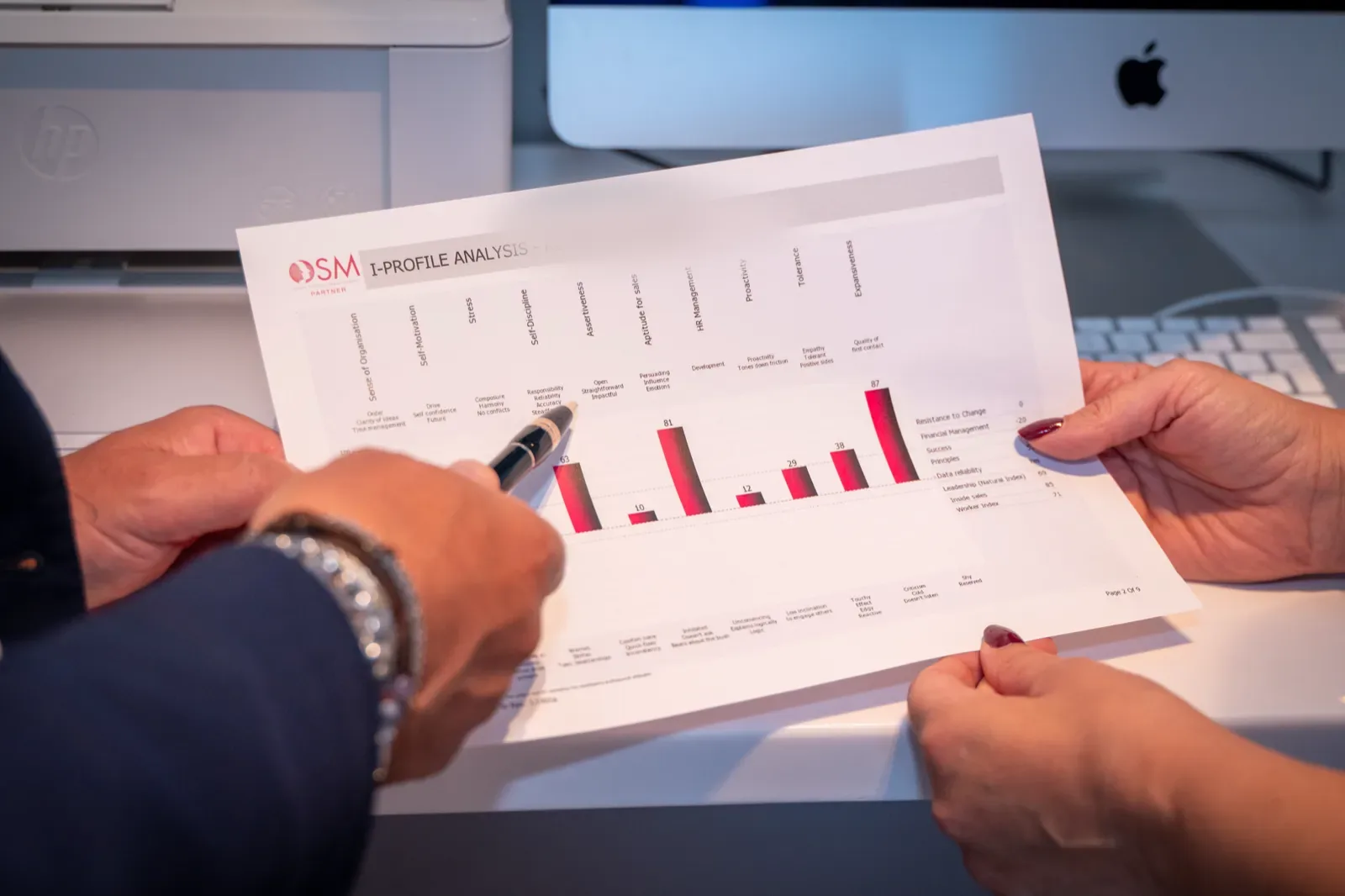
I-Profile is our own behavioural instrument. It does not measure what someone knows or what they have done — a CV covers that. It measures how they decide, how they behave under pressure, and what they need in order to keep trying.
Most behavioural tools on the market were designed for large organisations with an HR function to interpret them. They produce a long report, written in the language of psychology, that an owner of a thirty-person company has neither the time nor the reason to decode.
We built our own because we needed answers to different questions. Not “what personality type is this person”, but “will this person do this job, in this company, reporting to this manager, and will they still be here in two years”.
It is ours. We built it, we own it, and we can change it when the work tells us it needs changing. Nobody licenses it to us and nobody licenses it to our competitors.
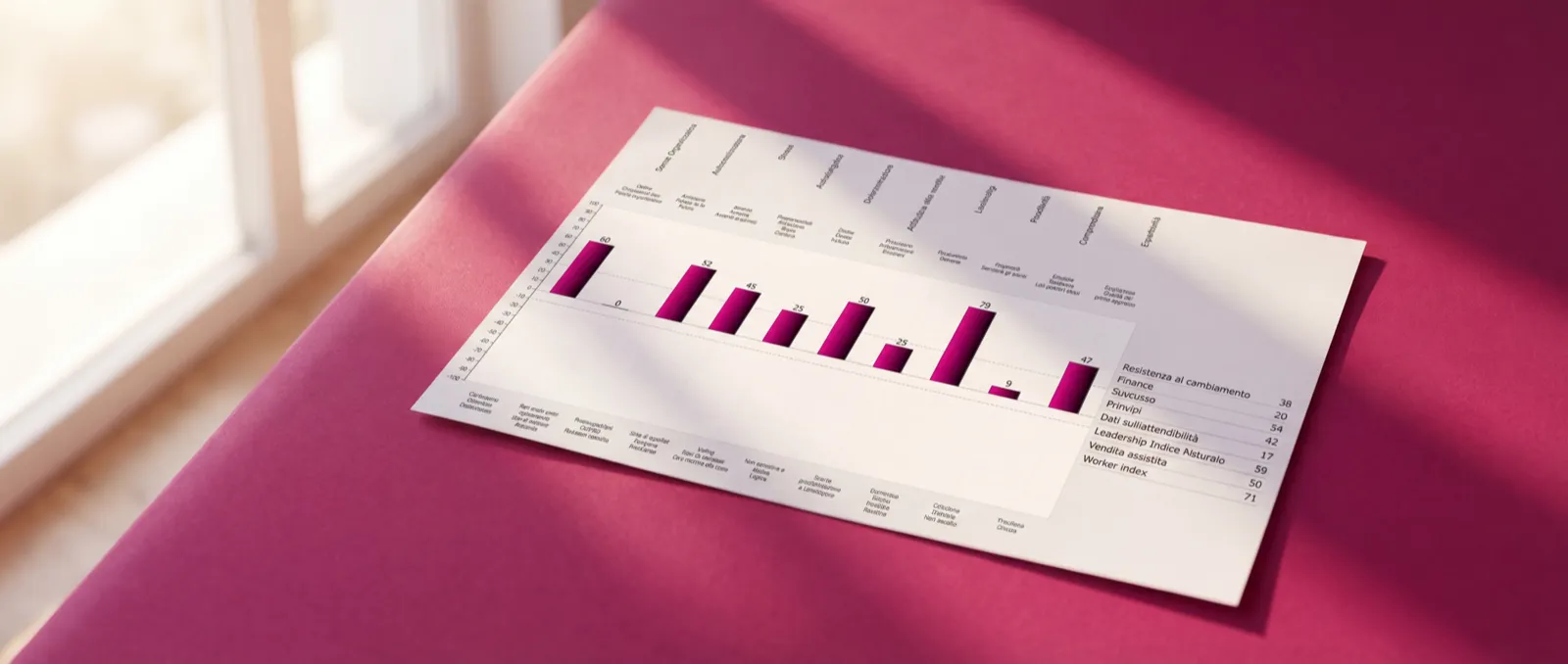
What the questionnaire asks, what comes out of it, and how to read the result without needing a psychologist in the room.
The instrument →Read a candidate before you sign, and turn the interview from an audition into a check of the things the profile flagged.
Before you sign →Understand why a team that looks capable on paper argues, stalls, or quietly avoids the same decision every month.
On existing teams →No behavioural instrument does, and anyone selling you one that claims to is selling something else. I-Profile tells you how a person operates. Whether that fits what you need is a judgement, and it stays yours.
It is also not a filter to run candidates through automatically. We do not use it to reject people; we use it to know what to ask them, and to know what a person will need from you if you hire them.
The fastest way to understand I-Profile is to see it applied to people you already know well. That is what the diagnosis does.